Plutus V3 & Chang Upgrade
A deep dive into Plutus V3 smart contracts and the Conway ledger era ushering in native governance.
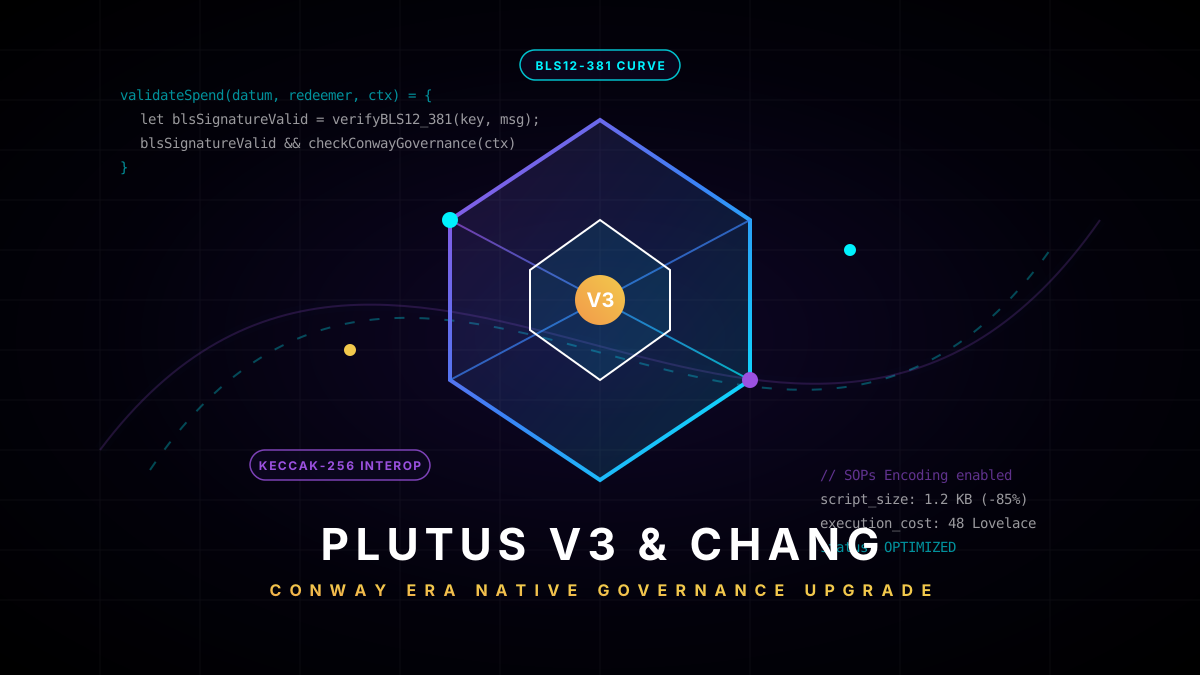
The Conway Ledger Era
The Chang Hard Fork marked one of the most critical transitions in Cardano history, ushering in the Conway Era. While Conway's primary focus was the implementation of fully decentralized on-chain governance under CIP-1694, it also delivered a massive upgrade to Cardano's developer ecosystem: Plutus V3.
What is Plutus V3?
Plutus V3 is a highly optimized execution engine and compiler upgrade for Cardano smart contracts. It introduces advanced cryptographic primitives, low-level bitwise operations, and data structural improvements that dramatically reduce contract sizes and transaction fees.
Key Cryptographic & Technical Primitives
Plutus V3 equips developers with powerful new built-in tools:
- BLS12-381 Elliptic Curves: Native support for BLS12-381 allows extremely efficient cryptographic operations. This is the fundamental building block for executing Zero-Knowledge Proofs (ZKPs), creating sidechain bridges, and optimizing signature aggregations.
- Keccak-256 & Blake2b-224: The inclusion of these hashing algorithms (especially Keccak-256, which Ethereum uses) dramatically improves cross-chain interoperability, allowing Plutus contracts to verify Ethereum signatures and interact seamlessly with EVM networks.
- Sums of Products (SOPs): A new data encoding technique that represents algebraic data types compactly. SOPs result in significantly smaller compiled Plutus scripts, meaning less data is written on-chain, leading to lower transaction fees.
- Bitwise Operations: Native bitwise operations allow low-level data manipulation, which is critical for writing highly optimized cryptographic libraries directly on Cardano.
Governance Integration
Plutus V3 also exposes governance state information directly to smart contracts. This allows developers to build complex, automated DAOs, customized multisigs, and programmable treasury locks that respond directly to on-chain DRep votes and constitutional boundaries.