Native Assets
How Cardano handles custom tokens and NFTs differently from other blockchains.
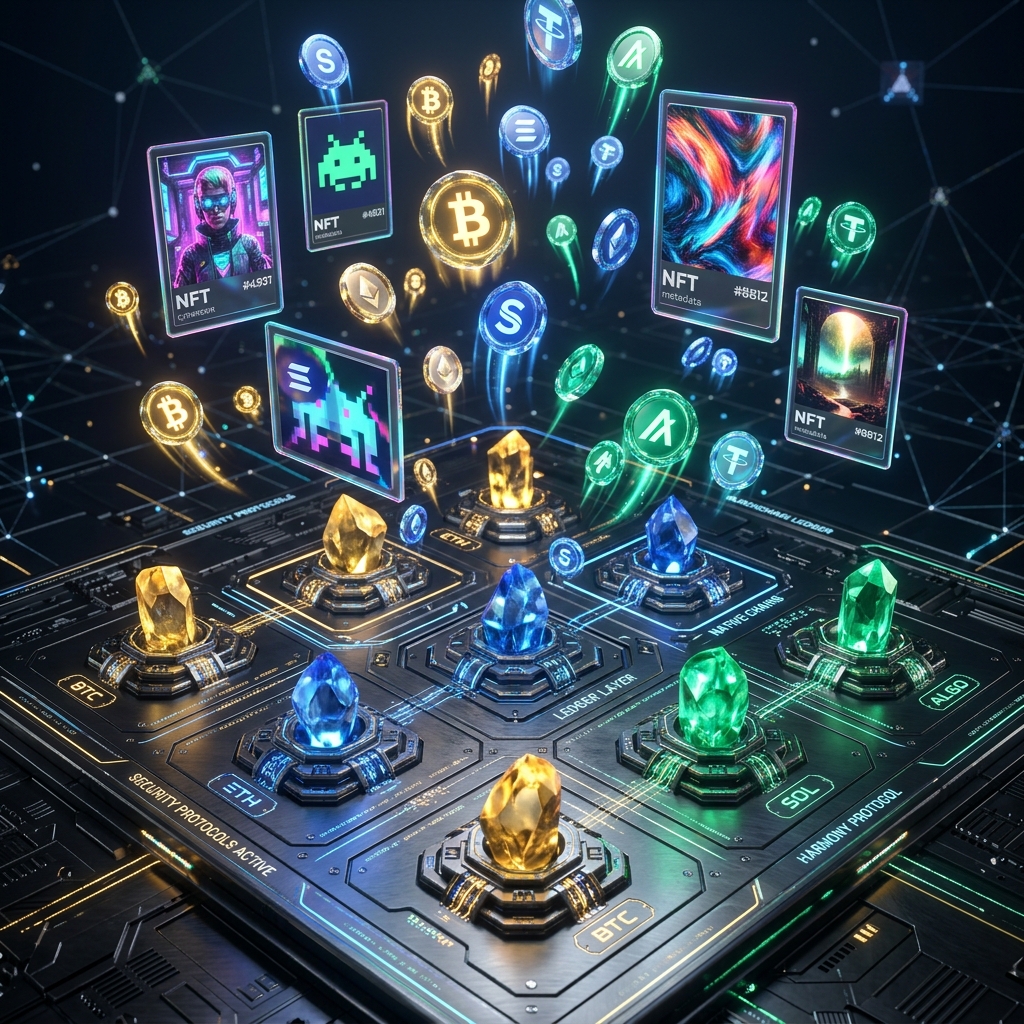
Tokens on Cardano
On most blockchains (like Ethereum with ERC-20 tokens), custom tokens are managed by Smart Contracts. This means every time you want to send a custom token, a complex piece of code runs to update a balance sheet, which is expensive and prone to security vulnerabilities.
Native by Default
Cardano takes a completely different approach. Custom tokens and NFTs on Cardano are called Native Assets. They are treated exactly the same way as ADA itself by the underlying ledger layer (the CSL). This means:
- No smart contracts required: You do not need smart contracts to mint, transfer, or burn native assets. The network handles the accounting natively.
- Low, predictable fees: Sending a native asset costs precisely the same low fee as sending ADA, calculated deterministically.
- High security: By removing smart contract code from basic token transfers, the risk of "rug pulls" via malicious contract logic during a transfer is eliminated.
Multi-Asset Ledger
Because the network natively understands tokens, a single Cardano transaction can easily bundle and send dozens of different tokens and NFTs to multiple recipients simultaneously. This is a massive advantage compared to the account model used by other chains.